


A Message From President Tom Fitton
Judicial Watch, Inc.is a conservative, non-partisan educational foundation, which promotes transparency, accountability and integrity in government, politics and the law. Through its educational endeavors, Judicial Watch advocates high standards of ethics and morality in our nation’s public life and seeks to ensure that political and judicial officials do not abuse the powers entrusted to them by the American people. Judicial Watch fulfills its educational mission through litigation, investigations, and public outreach.
The motto of Judicial Watch is “Because no one is above the law”. To this end, Judicial Watch uses the open records or freedom of information laws and other tools to investigate and uncover misconduct by government officials and litigation to hold to account politicians and public officials who engage in corrupt activities.
Litigation and the civil discovery process not only uncover information for the education of the American people on anti-corruption issues, but can also provide a basis for civil authorities to criminally prosecute corrupt officials. Judicial Watch seeks to ensure high ethical standards in the judiciary through monitoring activities and the use of the judicial ethics process to hold judges to account.
Judicial Watch’s investigation, legal, and judicial activities provide the basis for strong educational outreach to the American people. Judicial Watch’s public education programs include speeches, opinion editorials (op-eds), publications, educational conferences, media outreach, radio and news television appearances, and direct radio outreach through informational commercials and public service announcements.
Through its Open Records Project, Judicial Watch also provides training and legal services to other conservatives concerning how to effectively use the Freedom of Information Act and other open records laws to achieve conservative goals of accountability and openness in government.
Through its publication The Verdict and occasional special reports, Judicial Watch educates the public about abuses and misconduct by political and judicial officials, and advocates for the need for an ethical, law abiding and moral civic culture.
Judicial Watch also pursues this educational effort through this Internet site where many of the open records documents, legal filings, and other educational materials are made available to the public and media. This educational effort, which includes direct mailings to millions of Americans, educates the public about operations of government and the judiciary and increases public awareness if corruption and misconduct exists.
Warm regards,

Tom Fitton
President, Judicial Watch
Judicial Watch Investigations Team

Chris Farrell
Director of Investigations & Research, Board Member
Request an Interview with Chris Farrell
Christopher J. Farrell joined Judicial Watch in 1999 as the Director of Investigations & Research, and has been a member of the Judicial Watch Board of Directors since September 2003. He is a Distinguished Military Graduate from Fordham University with a B.A. in History, whereupon he accepted a Regular Army Commission and served as a Military Intelligence Officer specializing in counterespionage operations and clandestine human intelligence. Chris was designated a Military Intelligence Excepted Career (“Great Skills”) Officer. Following his command and operational assignments that included three tours of duty in the Federal Republic of Germany and one tour at Supreme Headquarters Allied Powers Europe, Chris returned to civilian life as a contractor to the defense and intelligence communities. His awards and decorations include: the Meritorious Service Medal with two Oak Leaf Clusters; the Joint Service Commendation Medal; the Army Commendation Medal; Parachutist Badge; Air Assault Badge; and the Republic of Guatemala Intelligence Star.
For decades, Chris has been a weekly contributor to multiple high-level media outlets — Op-eds, TV and radio –including Fox News, the Daily Caller, One America News Network (OANN) and Lou Dobbs Tonight. His own Chris Farrell’s On Watch is a popular weekly podcast for Judicial Watch.
Chris was a senior staff associate at Columbia University’s Mailman School of Public Health and adjunct professor of Journalism Law at George Mason University. He is the author of “Exiled Emissary: George H. Earle III ~ Soldier, Sailor, Diplomat, Governor, Spy,” published by Academica Press in May 2021.
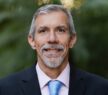
Sean Dunagan

Bill Marshall
William F. Marshall is a Senior Investigator for Judicial Watch. Bill was raised in Queens, New York, and graduated with honors from St. John’s University in Jamaica, New York with a B.A. in Government and Politics, and an M.A. in International Affairs from American University in Washington, DC. He served as an Intelligence Analyst with the Drug Enforcement Administration. He was then a Senior Investigator with the Investigative Group International, President of the Investigations Division of Armor Holdings North America, and co-founder of the international investigations firm GlobalSource LLC. He then founded the investigations firm Veritas Intelligence LLC. He joined Judicial Watch in 2013 as a Senior Investigator.
Private: Geoff Lyon
Geoff Lyon is an Investigative Counsel who screens and performs Triage upon all incoming Email/Voicemail/ as well as Snail-Mail Requests for Legal Assistance. If deemed appropriate upon his review, Substantive Requests are forwarded to Judicial Watch Directors and Other Branch Heads. As an Investigative Counsel, Mr. Lyon also researches and formulates litigation strategy/tactics with respect to Veterans and other meritorious Petitioners.
Kate Bailey
Create and file open records requests with federal and state agencies, review and analyze records received for public distribution, and coordinate with Judicial Watch attorneys to identify requests for FOIA litigation. Administer the day-to-day FOIA operations, primarily through tracking ongoing requests.
Kirsti Jespersen
Kirsti Jespersen is an Investigator who initiates, tracks, and analyzes the results of FOIA requests, performing deep research tasks for ongoing legal cases. Ms. Jespersen is a primary in-house observer and report-writer for GTMO detainee procedures in association with the Judicial Watch International Program (https://www.judicialwatch.org/public-education-the-international-program/) – established pursuant to the United Nations Department of Public Information mission.
Mark Spencer
Since February 2012, Mark Spencer has been the Southwest Projects Coordinator for Judicial Watch, Inc. He has lived in Phoenix Arizona since 1975, graduated with honors with a finance degree from Northern Arizona University in 1985, met his wife Shannon in 1986 on a Summer Project with Campus Crusade for Christ in Bangkok, Thailand, and was the top overall police recruit from the Phoenix Regional Police Academy in 1987. In 1993 Mark completed his graduate degree in exegetical theology from Western Conservative Baptist Seminary. During his police career he received the Phoenix Police Department’s Medal of Merit, the Police Chief’s Unit Award and the Protect & Serve community leadership award from RequireThePrior.org. For fourteen years Mark was an executive board member of the largest police association in Arizona, the Phoenix Law Enforcement Association (PLEA). He was the president of PLEA from 2007 until 2011 and, along with the PLEA board of trustees, served over 2,300 rank-and-file Phoenix Police Officers and Detectives. In July 2009, the Arizona Republic reported that Mark, in “his first two years as union president…earned…a reputation as a harsh critic of police management and a relentless advocate for Phoenix patrol officers.” Mark has been interviewed by local, international (CNN), and national (Fox National News) cable news outlets, has been quoted in numerous print publications (The New York Times, The Washington Post, The Nation, The Arizona Republic, Phoenix Magazine) and has participated on radio talk shows across the country: topics discussed included illegal immigration, police suicide, border violence, and police management pension violations. He has served in both an adjunct and guest faculty position at Arizona Christian University, Phoenix Seminary, Paradise Valley Community College and Glendale Community College. While still a sworn first-responder, he partnered with F.A.I.R. (Federation for American Immigration Reform) and Judicial Watch in reference to front-line law enforcement perspectives on illegal immigration and government corruption. His role as the voice of the largest police association in Arizona garnered him the title as being one of “three of the most polarizing figures in Arizona politics” by the Phoenix New Times in 2011. His retirement from the Phoenix Police Department in January 2012 ended a twenty-five-year career in which Mark and the PLEA team cultivated powerful community partnerships and facilitated unprecedented bipartisan support for rights of rank-and-file Arizona law enforcement. Mark is the author of A Moment In Timeand is the founder and co-director of Bema Investments (www.bemainvestments.org), a non-profit corporation which teaches Judeo-Christian leadership principles and facilitates charitable outreach efforts. He currently serves as the chaplain of the National Border Patrol Council (NBPC) which represents over 17,000 Border Patrol agents.
Patrick Francescon
Irene Garcia
Investigative Reporter

Micah Morrison
Chief Investigative Reporter
Micah Morrison is Chief Investigative Reporter for Judicial Watch and the author of Fire in Paradise: The Yellowstone Fires & the Politics of Environmentalism, published by HarperCollins. From 1994 through 2002, Micah worked for the Wall Street Journal editorial page as an investigative writer with a focus on political scandal and financial crime. He led the Whitewater investigation of the Clinton Administration and reported on union corruption, Indian casino gaming, money laundering, terrorism, and the corrupt Bank of Credit & Commerce International. Along with Editorial Page Editor Robert L. Bartley and Deputy Editorial Page Editor Melanie Kirkpatrick, he edited the six-volume series, Whitewater: A Wall Street Journal Briefing. He was nominated four times by the newspaper for the Pulitzer Prize: in the Editorial Writing category in 1997, 1998, and 1999; in the Investigative Reporting category in 2000.
In 2010 and 2011, Micah led the investigative reporting for the Fox News special, “Iran’s Nuclear Secrets.” In 2016, Micah’s work for Judicial Watch was recognized by the Retired Detectives Association of the NYPD for its “relentless investigation” into the killing of NYPD Patrolman Phillip Cardillo—a case known as “the Harlem Mosque Incident.” The group presented Micah with an “ARDY” award, its highest honor. In 2019, Micah was elected to a two-year term at New York City’s District 28 Community Education Council, serving more than 40,000 school children.
Susan Ouellette
Senior Investigator
Marlon Buenaventura
Investigator
Judicial Watch Legal Team

Paul J. Orfanedes
Director of Litigation, Board Member, Officer
Paul Orfanedes heads Judicial Watch’s Litigation Department and has been with Judicial Watch since its inception. Paul is a distinguished civil litigator who has argued in front of the Supreme Court and in the federal appeal courts on behalf of Judicial Watch and its clients.As Director of Litigation, he has been a spokesperson for Judicial Watch with his legal commentary appearing in major radio and print media outlets. In addition to managing the day-to-day operations of the Legal Department, Paul is Corporate Secretary and Treasurer of Judicial Watch. He is also member of the Board of Directors.Paul is a native of Illinois. He graduated from University of Illinois at Urbana-Champaign in 1986. He received his Juris Doctorate from American University in 1990.

Jason Aldrich
Senior Attorney
Jason Aldrich is Judicial Watch’s longest standing employee having joined the organization in November of 1997. Since 2001 he has served as a staff attorney. Jason has extensive experience litigating Freedom of Information Act cases in federal court as well as Freedom of Information Law cases in New York State. Jason has been involved in several significant Judicial Watch cases, including the FOIA lawsuit that uncovered a scheme in President Clinton’s Commerce Department to offer seats on government trade missions in exchange for campaign contributions. Jason received his law degree from the Marshall-Wythe School of Law at the College of William & Mary in 1997, where he was an article editor for the William & Mary Bill of Rights Journal. He received his undergraduate degree in Philosophy from Bates College in 1993. He is a member of the bars of New York, the District of Columbia and the U.S. Court of Appeals for the District of Columbia Circuit.
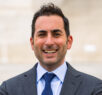
Michael Bekesha
Director, Constitutional Rights Litigation Program
Michael Bekesha is a senior attorney. He is a member of the bars of the District of Columbia, Massachusetts, and numerous federal courts, including the U.S. Supreme Court.

Christina Bobb
Senior Attorney
Christina Bobb is an attorney focused on national security law. She began her legal career in the United States Marine Corps where she defended Marines and Sailors in courts-martial and administrative separation hearings. Ms. Bobb served multiple overseas tours including Helmand Province, Afghanistan, and Stuttgart, Germany. After her military service, she transitioned to private practice at Higgs, Fletcher, & Mack LLP in San Diego, and then to Washington, DC, where she held executive level positions within the Department of Homeland Security. Christina served as attorney for President Donald J. Trump from 2022-2024 when she transitioned to the Republican National Committee to assist election integrity efforts for the 2024 election. In 2023, Ms. Bobb authored her first book Stealing Your Vote: The Inside Story of the 2020 Election and What it Means for 2024.

Lauren Burke
Senior Attorney
Lauren M. Burke joined the Judicial Watch legal team in September 2014. She has extensive trial experience and a background in government and public policy. Lauren worked for a large New England law firm and a boutique, full service law firm in Boston, MA where she was part of a strong litigation team that developed a cooperative legal group working in Massachusetts and Washington D.C. Lauren has litigated civil, commercial and criminal cases in federal, state, and administrative courts. Notably, Lauren argued against qualified immunity in a federal civil rights case and successfully defeated summary judgment in the U.S. District Court of Massachusetts; arbitrated an award for compensation, punitive damages, and attorneys’ fees in a Wage and Payment Act case on fraud and successor liability; negotiated a multi-million dollar settlement as lead counsel in an international trademark and patent rights case; was lead counsel in a consumer protection case obtaining favorable judgment and collaborating with the Massachusetts Department of Consumer and Regulatory Affairs for further prosecution; successfully resolved a commercial contract dispute in the international arbitration forum. Prior to embarking on a legal career, Lauren worked in government relations in both the public and private sectors in Washington, D.C. While pursuing a B.A. in politics from the Catholic University of America, Lauren worked at Judicial Watch in the development department. She received her J.D. from Suffolk University Law School in Boston, MA where she worked as a certified prosecutor in Boston district court under Massachusetts Supreme Judicial Court Rule 3.03. She also worked for the Massachusetts Committee for Public Counsel Services as an appellate attorney for indigent clients achieving remand or overturned verdict in 10 out of 12 appeals filed and argued. Originally from Philadelphia, PA, Lauren now resides and primarily practices in Washington D.C. She is licensed in Massachusetts and Pennsylvania.

Ramona R. Cotca
Director, Government Transparency Litigation Program
Ramona R. Cotca joined Judicial Watch’s legal team as a senior attorney in May 2013. For the last eight years prior to joining Judicial Watch, she worked as a litigator for a local boutique firm and then joined the national in-house litigation group for a Fortune 500 company. In her previous practice she represented corporate clients in a variety of complex civil litigation matters, including contracts, insurance, product liability, professional malpractice, real estate and wrongful death. Ms. Cotca has tried cases in local state and federal courts in the District of Columbia and Maryland, and has argued cases at the appellate levels, including the U.S. Court for Appeals for the Fourth Circuit. Ms. Cotca is a member of the bars of the District of Columbia and Maryland, as well as several federal courts, including the Supreme Court of the United States. Ms. Cotca earned her Juris Doctorate and Masters of Arts in International Affairs from Washington College of Law and American University in 2004. She graduated from the University of Michigan in Ann Arbor with high honors in 2001 and attended Oxford University in 2000. Ms. Cotca is also an active member in a number of professional legal organizations, including The Barristers, and sits on several boards. Ms. Cotca is fluent in Romanian.

Kara Davis
Attorney
Kara Davis joined Judicial Watch as an attorney in August 2024, having previously served Judicial Watch as a legal intern in 2023 and a paralegal in 2020. Before attending law school, Kara worked in communications positions in Wisconsin and Virginia, including serving as a spokeswoman for a political nonprofit. Kara earned her degree in Political Science and Communication Arts—Rhetoric from the University of Wisconsin, Madison in 2018, and her Juris Doctorate from Liberty University School of Law in 2024. She is committed to preserving the brilliant craftsmanship of the Framers and ensuring government accountability. Kara is licensed to practice law in the Commonwealth of Virginia and in the District of Columbia.
Meredith DiLiberto
Senior Attorney

Kathyrn Huth
Paralegal
Kathryn joined the Judicial Watch as a paralegal in July of 2024. She holds a BA in Interdisciplinary Studies with concentrations in Public Policy, History, and Physics from California Polytechnic State University, San Luis Obispo. As an undergraduate, Kathryn had the opportunity to work at Alliance Defending Freedom, a legal nonprofit that advocates for religious freedom, where she served as a communications intern. After graduating, Kathryn worked as an intern and fellow at the Clare Boothe Luce Center for Conservative Women, an organization dedicated to supporting young conservative women.
Philumina Johanni
Attorney

Eric Lee
Attorney
Eric Lee is an attorney at Judicial Watch, where he focuses on enforcing federal and state laws that promote transparency and integrity in the electoral process. Eric graduated with his B.A. from St. Mary’s College of Maryland and received his J.D. from the University of Maryland School of Law. He is licensed to practice in California, Maryland, the District of Columbia, and in federal courts in Illinois and Colorado.
Terra MacAloney
Paralegal

T. Russell Nobile
Senior Attorney
T. Russell Nobile is a Senior Attorney at Judicial Watch. His practice focuses on election integrity, civil rights, constitutional law, and matters involving official misconduct. He has appeared in federal and state courts nationwide, including the U.S. Supreme Court, and has testified before the U.S. House and Senate Judiciary Committees, as well as other committees.
Recently, Mr. Nobile serves as lead counsel in challenges to state practices permitting the counting of ballots received days – sometimes weeks – after Election Day. The U.S. Supreme Court has granted certiorari in two of these cases involving laws in Illinois (Bost et al. v. Ill. State Bd. of Elections, No. 24-568) and Mississippi (Watson v. RNC, et al., No. 24-1260).
Prior to joining Judicial Watch, Mr. Nobile served as a Trial Attorney in the Civil Rights Division of the U.S. Department of Justice and as a member of the U.S. Election Assistance Commission’s Board of Advisors. He later was in private practice on the Mississippi Gulf Coast. Mr. Nobile is admitted to practice in Mississippi and Louisiana and is based on the Mississippi Gulf Coast.

Sean O’Donnell
Director, Public Integrity Litigation Program
Sean W. O’Donnell has spent his career fighting waste, fraud, abuse, and corruption across government and industry. Over more than two decades of federal service, he worked as a trial attorney, prosecutor, and inspector general at two cabinet-level agencies.
For fifteen years at the Justice Department, Mr. O’Donnell served as an award-winning prosecutor concentrating on white collar fraud, corruption, and national security cases. Much of his work involved investigating whistleblower allegations of fraud committed by government officials, contractors, and grantees, through which the Department recovered more than $4 billion.
In 2020, Mr. O’Donnell was sworn in as Inspector General of the U.S. Environmental Protection Agency, leading more than 350 attorneys, agents, and auditors. Under his leadership, the EPA OIG grew from $3 million in monetary impact the year before he arrived to over $2 billion in 2024. That same year, the President appointed him acting Inspector General of the U.S. Department of Defense. During his nearly three-year tenure, his office recovered nearly $3.5 billion and issued 331 reports identifying over $1.25 billion in potential benefit to the Department. He also served as Lead Inspector General for Overseas Contingency Operations, directing oversight of operations in Afghanistan, Iraq, Syria, and Ukraine.
Mr. O’Donnell began his legal career as a law clerk on the U.S. Court of Appeals for the Eighth Circuit and the U.S. District Court for the Western District of Texas.
He is currently a senior attorney and director of the government accountability and anti-fraud litigation department at Judicial Watch, where he represents whistleblowers who have reported fraud and corruption to law enforcement and Congress.
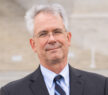
James F. Peterson
Senior Attorney
James F. Peterson, an attorney with broad experience in complex litigation, is a senior member of Judicial Watch’s legal team. His breadth of knowledge and experience have contributed greatly to Judicial Watch’s success as he has played a key role in some of Judicial Watch’s most significant cases. These include Judicial Watch’s case before the Supreme Court concerning Vice President Cheney Energy Task Force documents (Judicial Watch v. Nat’l Energy Policy Dev. Group) and many of Judicial Watch’s groundbreaking lawsuits seeking to compel the enforcement of the nation’s immigration law. Most recently, Mr. Peterson has worked closely with the Arizona State Legislature in its legal defense of Arizona’s “S.B. 1070” immigration enforcement law.Prior to joining Judicial Watch in 2002, Mr. Peterson was a member of the litigation practice of a large national law firm in Washington, D.C., representing business clients in federal and state courts and administrative proceedings. He also was in the litigation department of a major national trade association, representing the industry in complex tax and administrative litigation.Mr. Peterson is a graduate of the George Mason University School of Law, where he was the Articles Editor of the school’s Civil Rights Law Journal. He received his undergraduate degree from Kent State University in Ohio. Mr. Peterson is an active member of the Federalist Society and other conservative organizations. He is a member of the bars of the District of Columbia, Virginia, and numerous federal courts, including the Supreme Court of the United States.

Robert Popper
Director, Election Law Program
Robert Popper joined Judicial Watch in September 2013 as a senior attorney and directs Judicial Watch’s voting integrity efforts. Prior to joining Judicial Watch, Mr. Popper worked for eight years, five as deputy chief of the Voting Section, in the Civil Rights Division of the Department of Justice, in which capacity he garnered numerous professional awards. Before that, Mr. Popper worked as a private attorney in New York City for 17 years, where his practice extended to a wide range of legal matters, including voting rights. Mr. Popper served as counsel in a successful constitutional challenge alleging racial segregation in the design of New York’s congressional districts, and successfully defended the appeal to the U.S. Supreme Court. Mr. Popper is a published author on the topic of voting rights law. He developed a legal standard relating to gerrymandering that is widely cited by experts and was adopted by the Arizona Independent Redistricting Commission. He has testified before the Missouri Senate Redistricting Committee and the Pennsylvania House State Government Committee; and he has spoken about voting rights to a conference of U.S. Attorneys at the National Advocacy Center, to state officials, and to countless local community representatives. Mr. Popper is a graduate of the University of Pennsylvania and Northwestern University Law School. He is admitted to practice in the Southern and Eastern Districts of New York, the Court of Appeals for the Second Circuit, and the U.S. Supreme Court.

Cristina Rotaru
Paralegal
Cristina joined Judicial Watch as a legal assistant in 2002. She holds a BA and a Master’s degree in English from the University of Bucharest, Romania. She also has completed coursework toward a PhD in English at the University of Maryland, where she taught writing and composition for ten years.

Robert Sticht
Senior Counsel
Robert Sticht joined Judicial Watch as a senior attorney in February 2018. Robert has 30 years’ experience as a trial and appellate lawyer representing parties in complex civil and criminal cases and administrative proceedings involving public corruption, constitutional litigation and civil rights, white collar crime, organized crime and racketeering, major narcotics trafficking, tax controversies and litigation, civil enforcement actions by government agencies, and public records litigation. Robert’s background includes seven years on the Criminal Justice Act panel of the U.S. District Court for the Central District of California representing indigent persons accused of serious federal felonies. Before entering private practice, Robert served as a trial attorney with the U.S. Department of Justice and worked in the Tax Division and Criminal Division in Washington, D.C. He received his Master of Laws from New York University School of Law, his J.D. with honors from Southwestern Law School, and his B.S. from the University of Arizona. Robert is an active member of the California, New York, and District of Columbia state bars, and is admitted to practice before many federal district and appellate courts and the United States Supreme Court.
Brintley Spencer
Fall Law Clerk
Judicial Watch Board

Thomas Fitton
President, Board Member, Officer
Tom Fitton is the President of Judicial Watch, the public interest group that investigates and prosecutes government corruption. Founded in 1994, Judicial Watch seeks to ensure government and judicial officials act ethically and do not abuse the powers entrusted to them by the American public.With 20 years of experience in conservative public policy, Tom Fitton has helped lead Judicial Watch since 1998 and overseen its tremendous growth and success in recent years. Under Fitton’s leadership, Judicial Watch was named one of Washington’s top ten most effective government watchdog organizations by The Hill newspaper.
Mr. Fitton provides Judicial Watch with strategic guidance and leadership on Judicial Watch’s comprehensive efforts to fight government corruption. He is a nationally recognized expert on government corruption, immigration enforcement, congressional and judicial ethics, and open government.
A former talk radio and television host and analyst, Tom is well known across the country as a national spokesperson for the conservative cause. He has been quoted in TIME, Vanity Fair, The Washington Post, The New York Times, The Associated Press, The Los Angeles Times, The New York Post, and most every other major newspaper in the country. He has also appeared on ABC, CBS, NBC, CNN, FOX News Channel, C-SPAN and MSNBC.
Mr. Fitton has authored numerous articles such as “Judicial Activism Hurts our Courts,” “What Bill Clinton Knew About bin Laden,” “Following Terrorism’s Money Trail,” “Senate Abandons Judicial Nominees,” “Every Town is a Border Town,” “Obama’s Records Problem” and “Jesse Jackson Exposed.” Judicial Watch also publishes the monthly 375,000+ circulation Verdict newsletter and runs the cutting-edge Internet site JudicialWatch.org, which includes the oft-cited Corruption Chronicles blog. Mr. Fitton gained national attention as a political analyst, previously working for America’s Voice and National Empowerment Television. He is a former employee of the International Policy Forum, the Leadership Institute, and Accuracy in Media.Mr. Fitton holds a B.A. in English from George Washington University.
Paul J. Orfanedes
Director of Litigation, Board Member, Officer
Paul Orfanedes heads Judicial Watch’s Litigation Department and has been with Judicial Watch since its inception. Paul is a distinguished civil litigator who has argued in front of the Supreme Court and in the federal appeal courts on behalf of Judicial Watch and its clients.As Director of Litigation, he has been a spokesperson for Judicial Watch with his legal commentary appearing in major radio and print media outlets. In addition to managing the day-to-day operations of the Legal Department, Paul is Corporate Secretary and Treasurer of Judicial Watch. He is also member of the Board of Directors.Paul is a native of Illinois. He graduated from University of Illinois at Urbana-Champaign in 1986. He received his Juris Doctorate from American University in 1990.
Chris Farrell
Director of Investigations & Research, Board Member
Request an Interview with Chris Farrell
Christopher J. Farrell joined Judicial Watch in 1999 as the Director of Investigations & Research, and has been a member of the Judicial Watch Board of Directors since September 2003. He is a Distinguished Military Graduate from Fordham University with a B.A. in History, whereupon he accepted a Regular Army Commission and served as a Military Intelligence Officer specializing in counterespionage operations and clandestine human intelligence. Chris was designated a Military Intelligence Excepted Career (“Great Skills”) Officer. Following his command and operational assignments that included three tours of duty in the Federal Republic of Germany and one tour at Supreme Headquarters Allied Powers Europe, Chris returned to civilian life as a contractor to the defense and intelligence communities. His awards and decorations include: the Meritorious Service Medal with two Oak Leaf Clusters; the Joint Service Commendation Medal; the Army Commendation Medal; Parachutist Badge; Air Assault Badge; and the Republic of Guatemala Intelligence Star.
For decades, Chris has been a weekly contributor to multiple high-level media outlets — Op-eds, TV and radio –including Fox News, the Daily Caller, One America News Network (OANN) and Lou Dobbs Tonight. His own Chris Farrell’s On Watch is a popular weekly podcast for Judicial Watch.
Chris was a senior staff associate at Columbia University’s Mailman School of Public Health and adjunct professor of Journalism Law at George Mason University. He is the author of “Exiled Emissary: George H. Earle III ~ Soldier, Sailor, Diplomat, Governor, Spy,” published by Academica Press in May 2021.
Judicial Watch Staff Team
Judicial Watch Directors/Officers
- Thomas Fitton – President, Board Member, Officer
- Paul Orfanedes – Director of Litigation, Board Member, Officer
- Chris Farrell – Director of Investigations & Research, Board Member
Legal
- Paul Orfanedes – Director of Litigation
- Jason Aldrich – Senior Attorney
- Michael Bekesha – Director, Constitutional Rights Litigation Program
- Christina Bobb – Senior Attorney
- Lauren Burke – Senior Attorney
- Ramona Cotca – Director, Government Transparency Litigation Program
- Kara Davis – Attorney
- Meredith DiLiberto – Senior Attorney
- Kathyrn Huth – Paralegal
- Philumina Johanni – Attorney
- Eric Lee – Attorney
- Terra MacAloney – Paralegal
- T. Russell Nobile – Senior Attorney
- Sean O’Donnell – Director, Public Integrity Litigation Program
- James Peterson – Senior Attorney
- Bob Popper – Director, Election Law Program
- Cristina Rotaru – Paralegal
- Robert Sticht – Senior Counsel
- Brintley Spencer – Fall Law Clerk
Investigations
- Chris Farrell – Director of Investigations
- Sean Dunagan – Senior Investigator
- Bill Marshall – Senior Investigator
- Chris Nelson – Senior Investigator
- Kate Bailey – FOIA Program Manager
- Kirsti Jespersen – Investigator
- Mark Spencer – Southwest Project Coordinator
- Patrick Francescon – Investigator
- Irene Garcia – Investigative Reporter
- Micah Morrison – Chief Investigative Reporter
- Susan Ouellette – Senior Investigator
- Marlon Buenaventura – Investigator
To learn more about the documents we have uncovered and our current investigations, visit the Investigative Bulletin.
Communications
- Jill Farrell – Director of Public Affairs
- Amelia Koehn – Public Affairs Coordinator
- Tatiana Venn – Social Media Manager
- Troy Donovan – Broadcast Coordinator
- Shawn Ouellette – Broadcast Manager
- Mary McCants – Broadcast Associate
- Esteban Melgar – Broadcast Associate
To find out more about our communications activities, visit the Press Room and our Facebook Page. Also make sure to subscribe to our Youtube page, and follow us on Instagram and Twitter.
Membership & Development
- Steve Andersen – Director of Development
- Meagan Pfalzer – Director of Development Operations
- Daniel Sonners – Director of Direct Marketing
- John Albertella – Creative Director
- Candice Velazquez – Manager of Planned and Major Gift Operations
- Angel Azar – Regional Development Manager
- Jim Petruzzello – Regional Development Manager
- Steve Sheldon – Regional Development Manager
- Scott Walsh – Regional Development Manager
- Ariana Azizkeya – Direct Response Marketing Manager
- Arleen Godfrey – Direct Marketing Production & Traffic Manager
- Tim Wathen – Direct Marketing Production & Traffic Manager
- James Campbell – Digital Fundraising Manager
- David Collins – Grants Manager
- Elise Schubert – Development Coordinator
- Gillian Pietrowski – Manager of Development Operations
- William Scott – Development Coordinator
- Skyler Silbey – Development Coordinator
- Kevin Willmann – Assistant Marketing Manager
- Hutson Holder – Development Operations and Grants Coordinator
Click here to learn more about becoming a member of Judicial Watch. Interested in planned giving? Contact our Development Department at 1-888-JW-Ethic (1-888-593-8442) or by e-mail – [email protected]
Administration & Finance
- Tim Gray – Controller
- Stephen Wilson – Financial Operations Manager
- Janice Rurup – Special Assistant to the President
- Darlene Robinson – JR Accountant
- Tiara Darby – Director of HR/Operations
- Danielle Mundy – HR/Operations Assistant
Careers
Thank you for your interest in working for Judicial Watch. We currently have openings in the following position(s):
___________________________________________________________________________________________